

12 December 2025
Managing Site Access and Security on Construction Sites – Health and Safety
Construction site security and access control are fundamental aspects of health and safety management, essential for protecting workers, assets, and the public while ensuring compliance with UK regulations, particularly the Health and Safety at Work Act 1974.
Effective site management requires a comprehensive approach to security that integrates physical measures, personnel management, and emergency procedures.
Physical Security Measures
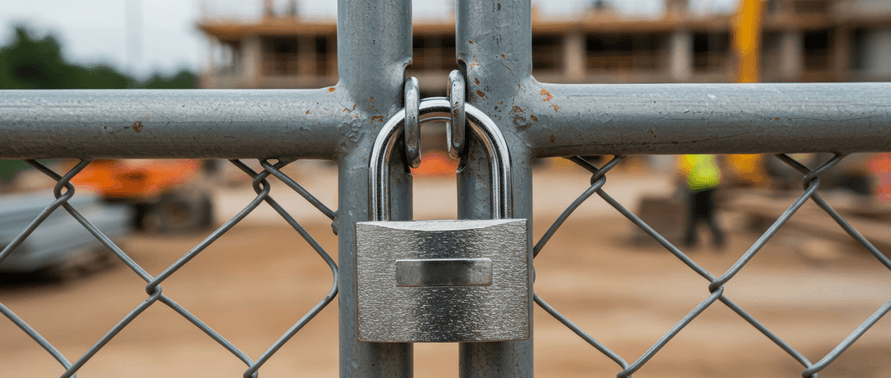
The foundation of site security begins with robust physical barriers. Construction sites must be enclosed with appropriate perimeter fencing, typically 2.4 meters high, and fitted with secure access gates. Temporary hoarding should be regularly inspected and maintained to ensure its integrity. Clear signage must be displayed, indicating site rules, hazards, and emergency procedures in accordance with HSE guidelines.
Access Management Systems
Modern construction sites increasingly employ electronic access control systems, including swipe cards or biometric readers, to monitor and control site entry. A structured signin/sign-out procedure is essential, with all personnel and visitors required to follow established protocols. Delivery vehicles must adhere to designated routes and times, with drivers following specific site safety procedures.
Personnel Management and Identification
All workers must complete site induction before accessing the site. PPE compliance should be checked at entry points. Visitors require pre-registration and must be accompanied by authorized personnel throughout their visit. Temporary passes should be issued with clear expiry dates and returned upon departure.
Security Monitoring
Professional security personnel, supported by CCTV systems and adequate lighting, form the backbone of site monitoring. Plant, machinery, and valuable materials should be secured in designated compounds with appropriate key management systems and asset tracking procedures.
Emergency Procedures and Response
Clear protocols for security breaches must be established and communicated to all site personnel. These should integrate with broader emergency procedures, including fire safety and evacuation plans. Muster points must remain accessible, and communication systems tested regularly. Documentation of all incidents is essential for review and improvement.
Risk Assessment and Continuous Improvement
Regular security risk assessments should identify potential threats and vulnerabilities, with control measures evaluated for effectiveness. Site audits, incident analysis, and staff feedback contribute to continuous improvement of security procedures. Updates to systems and procedures should be implemented based on findings and changing site conditions.
Training and Communication
All site personnel require security awareness training, including emergency procedures and reporting protocols, if this hasn’t already been covered by ‘Site Induction’ training. Regular briefings ensure updates on security measures reach all workers. Clear communication channels for reporting concerns or incidents must be maintained and promoted.
Legal Compliance
Sites must comply with CDM Regulations 2015 and data protection requirements while maintaining comprehensive records of security-related activities. Insurance requirements often stipulate minimum security standards that must be met and documented.
Effective site access and security management requires commitment from all stakeholders and regular review of procedures. By implementing comprehensive security measures, construction companies not only protect their assets and workforce but also demonstrate compliance with legal obligations and best practice standards. Continuous improvement through monitoring, feedback, and updates ensures security measures remain effective and appropriate for evolving site conditions.
Mark Stevens: CMIOSH | BSG Regional Manager
Thoughts on this article? 💭 We want to hear from you!
Drop your views at buildingsafetygroup@bsgltd.co.uk – we read every message and love engaging with our construction community. Your perspective matters!