


07 May 2026
BSG Reports 21% Surge in Traffic Management Breaches on Construction Sites

The Building Safety Group (BSG), the UK’s largest construction safety organisation, has today issued an urgent industry alert following the identification of a significant 21% rise in Traffic Management breaches across construction sites nationwide.
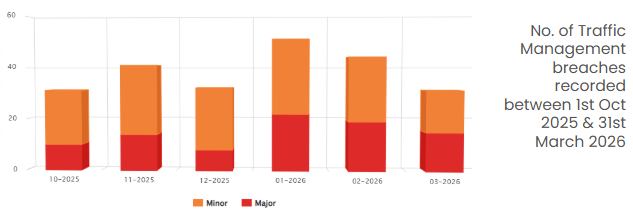
The alarming figure is drawn from approximately 6,000 independent safety inspections conducted on behalf of the construction industry over a six-month period, comparing Q4 2025 with Q1 2026.
The findings serve as a stark reminder of the very real and preventable dangers posed by inadequate traffic management and pedestrian segregation on construction sites, and reinforce BSG’s unwavering commitment to driving meaningful, measurable improvements in construction safety culture across the United Kingdom.
A Growing and Preventable Crisis
According to the Health and Safety Executive (HSE), inadequate pedestrian and traffic management on construction sites is responsible for approximately seven worker deaths and 93 serious injuries every year in the UK. In the 2024/25 period alone, 35 construction workers lost their lives on site, with vehicle-related incidents accounting for a significant proportion of that devastating total. Furthermore, four members of the public were killed in incidents connected to construction activities during the same period — a sobering reminder that the consequences of poor site management extend far beyond the workforce itself.
The most common causes of traffic-related injuries and fatalities include being struck by a moving vehicle, being struck by a forklift truck, falls from vehicles and being trapped between a vehicle and a fixed structure such as a wall. New build projects also represent a particularly elevated area of risk for Traffic Management failings.
Common on-site deficiencies identified during BSG’s inspections include poor or absent segregation of pedestrians and vehicles, broken or non-functioning reversing alarms and cameras, and a lack of trained banksmen — all of which are entirely preventable with proper planning, resourcing, and management oversight.
The gravity of these failings was brought into sharp focus in October 2025, when Marlborough Highways Ltd was fined £546,000 following the death of one of its employees — a tragic and costly consequence of the very failures BSG’s inspections continue to identify across the industry.
Planning, Segregation, and Operational Control: The Path to Safer Sites
BSG’s position is unequivocal: the overwhelming majority of construction transport accidents are preventable. The organisation stresses that effective traffic management must be embedded from the earliest stages of a project — beginning at the design stage — and must be rigorously maintained and monitored throughout the entire construction process.
Careful site layout planning, clearly defined and appropriately sized pedestrian and vehicle routes, and robust operational controls are not optional enhancements; they are legal requirements and moral imperatives.
Andrew Harper, Head of Technical and CDM Support at BSG, commented: “The law is clear — you must organise a construction site so that vehicles and pedestrians using site routes can move around safely. “Routes need to be suitable for the people or vehicles using them, positioned correctly, and sufficient in both number and size. This is not a complex or costly requirement; it is a fundamental duty of care that every site manager, principal contractor, and CDM duty holder must take seriously.”
A 21% increase in Traffic Management breaches is not a statistic we can accept passively — it demands an immediate and collective response from across the industry.”
Andy further emphasised the operational dimension of the issue, adding: “Our message to the industry is unambiguous: vehicle accidents on site can and should be prevented through the effective management of transport operations throughout the construction process. Whether it’s ensuring banksmen are properly trained and deployed, that reversing aids are fully functional, or that pedestrian and vehicle routes are clearly segregated and consistently enforced — these are achievable standards.”
“BSG will continue to support our members and the wider industry in meeting them, because every worker deserves to go home safely at the end of every working day.”
BSG’s Commitment to Continuous Safety Improvement
BSG remains steadfast in its mission to lead the construction industry towards the highest possible standards of health and safety performance.
Through its extensive programme of independent site inspections, technical guidance, CDM support, and member engagement, BSG continues to provide the construction sector with the tools, knowledge, and expertise required to identify risk, implement effective controls, and foster a genuine culture of safety at every level of an organisation.
The 21% rise in Traffic Management breaches identified in this latest reporting period will serve as a catalyst for intensified focus, targeted guidance, and renewed industry dialogue — because for BSG, the goal is not simply compliance, but the complete elimination of preventable harm on construction sites across the UK.
MEDIA ENQUIRIES: For press and media enquiries, please contact: Mark Johnson, The Building Safety Group (BSG) Communications Team Email: buildingsafetygroup@bsgltd.co.uk Telephone: 0300 304 9090
ABOUT THE BUILDING SAFETY GROUP (BSG)
The Building Safety Group (BSG) is the UK’s largest construction safety organisation, providing independent health and safety inspection services, CDM support, and technical guidance to the construction industry.
With a membership base spanning contractors, developers, and specialist subcontractors of all sizes, BSG conducts thousands of independent site inspections each year, delivering actionable insight and expert support to help organisations meet their legal obligations and protect their most valuable asset — their people. BSG is committed to raising standards, reducing risk, and championing a culture of safety excellence across the entire construction sector.